

The Sea
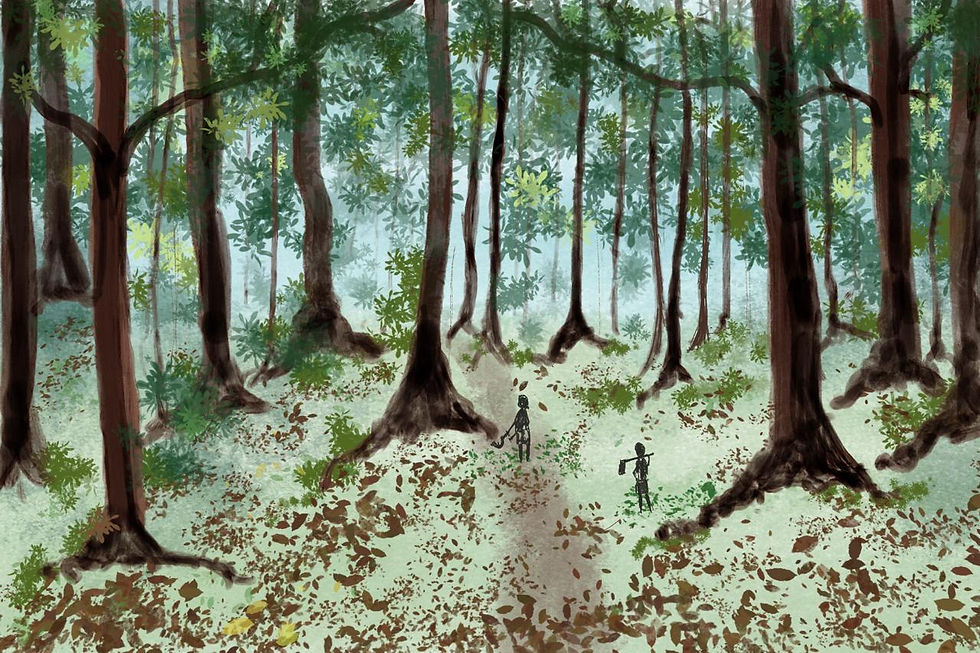
The author has never seen the sea. This piece is a lyrical meditation on longing for the sea from the valleys of Kashmir. Accompanied by original artwork and a specially composed instrumental score, this reflective piece explores tension, wonder and the quiet pull between roots and wildness.
If the sea ever showed up in my valley, I think the mountains would raise their eyebrows, if they had any. Rising like watchful elders, they have watched generations come and go without flinching. They have seen wars and winters, weddings and wanderings. And now, here comes this roaring, restless visitor, crashing in like she owns the sky.

The sea would probably roll in, loud and laughing, asking the mountains, “Haven’t you ever felt like moving?”
The mountains would scowl. “Haven’t you ever felt like staying still?”Maybe they’d argue a little. Trade silences, throw shadows. But over time, a grudging admiration may build. A wave might tap at a cliff. A snowcap might thaw a little earlier. And somewhere between that tension and tenderness, I’d be standing.

My feet have known soil, not sand. My ears have known silence broken only by birdsong or the hush of a stream. But still, when I close my eyes, I imagine the sea.
My only association with the sea has been the seashells that my cousin once brought from the beaches of Chennai. I was eight. I pressed one to my ear, expecting to hear her like they do in cartoons. I didn’t. Just a hollow quiet that somehow deepened my curiosity. I lost the shells eventually, but I never forgot how they felt—smooth, curved, strangely alive.
I think I crave the sea precisely because I’ve never seen her. My valley life is built on routine: rivers that return the same way each year, the predictability of snow, the familiar warnings from my mother during school trips: “Don’t stare too long at the streams, you’ll get dizzy and fall.” Maybe she wasn’t entirely wrong. I do feel dizzy when I imagine the sea.
Still, valley people are not sea people. We know water differently. We know the naags, the crystal springs, the water of which my grandmother craved in her final days. We know the wide, freezing stream in my mother’s village, the one I’ve crossed barefoot, teeth chattering, slippers floating away, where chutney was once made on rocks. We know yarbals by the streamside that were once full of the rhythm of clothes being beaten clean, laughter and gossip.

And yet, I imagine the sea’s rhythm too—wilder, messier. I imagine her layered scents. Not clean like the cold spring water I cup in my hands, but dense and restless. Salt, yes, but also something sharper. Like tree bark after rain. Oddly familiar. Like the air just before a storm rolls in. Unpredictable. Like rust on old haveli gates. Timeless. Like crushed walnut shells. Earthy. Like tandoor fires. Smokey and lingering. Like a memory I’m trying to recall.
Its colours, too, feel like feelings I’ve never had names for. Not the polite silver of our rivers or the pale green of mountain lakes. Charcoal and navy when it’s sulking. Setting itself on fire at sunset. Turquoise for Instagram. Always more than one thing at once.
Maybe I see it this way because the valley taught me to notice details: the way Earth smells different after snow, how Chinar leaves crunch in October, how silence has texture. And maybe, because of that, even imagining the sea becomes intimate. A private act of wonder.

Sometimes I wonder if the sea is a version of myself I haven’t met yet. Not reckless, but uncontained. Less careful and a little more free. I love how she doesn’t murmur or glide. She crashes. She takes space. She refuses to wait for an invitation or approval. And maybe that’s what draws me the most, not just its power, but her refusal to be anything but herself.

So if she ever came here and met my rivers and mountains, I think I’d walk to her edge and just…watch.
Not to claim her. Not to be claimed. Just to stand still for once, and let something enormous show me how small and whole I can feel at the same time.

About the author
Touyiba is a valley child who loves history, politics and Johnny from Hotel Transylvania. She's keen to explore the bridge between nature and culture through folktales and vivid narrations. You might envy her for her WhatsApp sticker collection.

About the artist
Karunya’s work as an artist and nature educator explores how visual narratives can spark deeper connections with wildlife. Her favourite pastimes include napping under open skies and climbing boulders, and she never leaves the house without her sketchbook and trusty magnifying glass.

About the musician
Samuel Jacob is a singer-songwriter who spends every minute he can having conversations with his guitars - they range from serious introspections to DAD(GAD) jokes.
Sharing is caring.
Share your thoughts with us in the comments section below.
Use the links below to share this story on your social networks.


As someone who grew up around the sea and never stopped loving it, reading this was a warm, wholesome experience. Hope you get to see the sea soon and savour it fully. I welcome you to Kerala with all my heart for you to enjoy the same.
Such an amazingly beautiful experience! Are the words creating the magic or is the music taking us for spinny rides on the tides? Such merging of mind and matter...I have never experienced.
I can’t remember when I felt so moved by a piece of writing - the music and art I’m sure added to the experience, and that’s what it felt like - an experience. Beautiful
Incredible! Also makes me think of how amazing this country is. Mountains, sea, everything! I hope you get to see the ocean someday. Also love the illustrations in this article and the music playing in the background as I read it. Great work by all three artists.
This was breathtaking!
Hope you get to experience the sea soon. Curious to know your thoughts after that.