

Wildlife in Town
An unexpected encounter with an Egyptian Goose opens the author’s eyes to the wildlife living alongside her in town, transforming her everyday walk into moments of discovery.
I was walking back from work one evening, as always, my thoughts on what to cook for dinner, what shopping I needed, what to watch on TV...the same walk, the same dead-end routine that I have followed for years. Cross the road at the lights, turn left into Durban Road, take the shortcut through the park, walk 100 metres to the small bridge at the end of the park where there is a natural spring, carry on to the main road leading home...I could do this in my sleep.
And that's when I saw it.

A goose. An Egyptian Goose, no less, in Zen-like repose, under the tree at the edge of the spring, in stillness and poise that stopped me in my tracks. I watched as she stood there by the murky water, frozen in her tranquility, unaware of the noise of the traffic, the dog walkers, the cyclists, and me. How long has she been there? How long has this been going on? What have I missed in all those blind, meaningless treks to work and back?
“What is this life, if full of care
We have no time to stand and stare” ( W.H.Davies)
And stare I did. This is wildlife at my doorstep.
That first encounter made me look differently at the creatures with whom I had always shared the town. Lowestoft, I began to realize, is full of wildlife. I used to think that wildlife exists in forests, nature reserves, and sanctuaries. Or in the countryside, where people gather and talk in hushed tones, weighed down by cameras with special lenses as long as your arm, to catch that particular feature of the creature being observed: colour of eyes, beak, plumage, skin. Not any more. This creature is a few meters away from where I stood. This too is wildlife, and in a municipal park close to me, in my neighbourhood, in fact.

I live in Lowestoft in the East of England. It is a seaside town and, like all seaside towns, home to armies of seagulls. Life is a challenge for them. Ever since the depletion of fish in the sea, they have been making inroads into towns in search of food. Grab it where you find it, be it a handful of chips thrown away as litter or a burger in the hand of a toddler trailing behind a harassed mum. The good people of Lowestoft are polarised into those who think seagulls are vermin and those who think seagulls are vermin and hence must be exterminated.


I don't blame the seagulls. When with humans, do as the humans do! Do you feel like a nap is coming on? Find a cosy spot to sunbathe. Tough if it happens to be the roof of a car. Dodge in and out of traffic with the advantage of a vertical take-off to avoid road rage, and fly off into the sky for a bird’s-eye view, pardon the pun, perched on a street light, watching fools go by. A seagull walks into the local library, a welcome sight these days when digital books don't need libraries.

Lowestoft is home to kittiwakes, a kind of seagull. In the wild, they live on coastal cliffs away from predators. Unlike other seagulls, they do not eat chips and burgers but rely on small fish. But there are no cliffs in Lowestoft. The sea has eroded so far inland that the kittiwakes look for ledges on buildings and church steeples, or any structure that emulates safe cliff tops. My heart warms to the sight of kittiwake nests securely tucked above the doorway of The Salvation Army office, The Citadel, aptly named as a final safe place for gulls that have flown from the Arctic to Lowestoft during the breeding season.

Lowestoft Town Council has deemed it a crime to move or destroy the nests. So it should, because Lowestoft has the largest number of kittiwakes in the UK and needs protective legislation. But say that to the shopkeepers and residents of high-rise buildings who need to constantly jet-wash the windows, front doors, and pavements to suppress the stink of bird droppings.

There is an urban myth that, no matter where you are, there is a rat 6 to 8 meters away. Thankfully, a myth, but imagine my delight in seeing wildlife in the busiest streets of London.
Once I started looking for wildlife in Lowestoft, I began noticing it elsewhere, too. Even the busiest cities have their unexpected encounters. On a recent visit there, my friend Marian took me to a Saturday market in Richmond. Nothing new in a market, I thought to myself, but wait for it, there it was. A lone heron, under a bridge on the Hogsmill River, which flows into the Thames. He is a well-known resident, totally oblivious to the iconic red London buses, the cars, cyclists, joggers, and police sirens. “You go your own way,” thinks the wise old bird as it stands its ground under the bridge.


And not far off from the heron, the river rolls on, with boats and barges and dinghies plying tourists and Londoners going to work. Seagulls hitchhike and sunbathe, and moorhens calmly build new nests close to the boats that are moored on the banks. Tourists have their season, but wildlife goes on forever.
Marian and I walked further into Richmond, to Hampton Court, once home to the Tudor dynasty, King Henry VIII, and all those that followed him. Hampton Court sits on the banks of the River Thames, and so do the mute swans in the grounds of the palace. Elegant necks tucked into their wings, a pair of swans sleep peacefully on a Sunday afternoon. Did they know that they are the property of The British Crown and no one can harm, injure, or kill them as long as they swim in open public waters? Perhaps they do, hence sleep in peace!


Ever since the epiphany moment when I encountered the Egyptian Goose in my local park, I have been following wildlife in Lowestoft. From raucous seagulls and intrepid kittiwakes in the town centre to the graceful glide of the mute swans in the murky, duckweed-choked spring in the park.
A family of swans is a local attraction for the children. Doreen, my 87-year-old neighbour, who stopped walking in the park once her children had left home, needed very little persuasion from me to walk in the park again. We became the swan family "followers”. The young ones were only a few weeks old when I first spotted them, 8 of them, clinging to mum and dad, who kept a beady eye on their brood. Doreen and I decided that dad went first, the babies followed, and mum guarded the rear. No one steps out of line; they do as they are told. Why are they called 'wildlife'? I wondered. The discipline and trust the cygnets display would be every mother's dream.
Small, delicate, fluffy brown babies that make you want to hold your breath and stop the world and wish this sight would never stop. The Swan Watch extended to several weeks. From little tottering babies, they grew into young, lively infants, still sporting brown feathers, with occasional glimpses of white. No, they don't swim in a line now they are older, but they stay together, thrusting long brown necks into the water while parents watch. Occasionally, mum takes a nap while dad looks on. They are never far from the young ones.
‘Co-parenting’ at its best. Doreen and I can't wait to see them morph into the pure white swans that we once thought existed only in Disney creations. They were a brood of 8 in June and are still a brood of 8 in August. I have never watched a brood before. The park keeper said that only one pair ever returned every year.

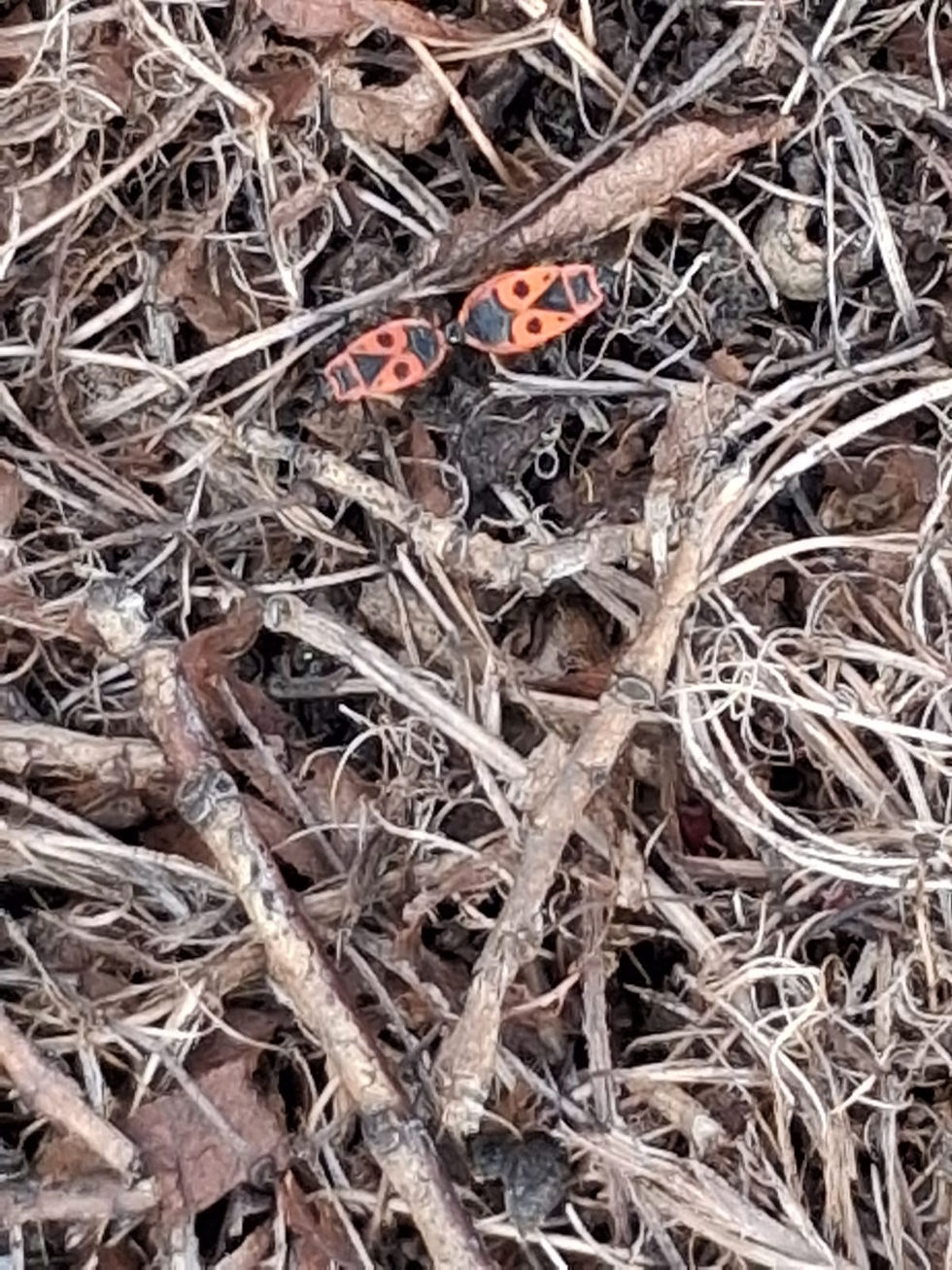

And having got into the habit of stopping and staring and filming, I notice it's not just wild things that thrive in town. That daffodil in spring and the poppy in summer sink their roots into the tiny square inch of soil on a concrete patio and raise their faces into the light. What explosive energy lurks in the shadows!

A walk into town to buy my groceries, or a newspaper, or a visit to a friend has now become a walk on the wild side. Rare moments of joy and a bit of a laugh, when my eyes fall on that stony, cold cat carved in stone, holding court on a gatepost. Look, he's got a hat on and a scarf.
Like the birds and the plants, he too is much loved.

About the author

Lakshmi Williams is a 76-year-old explorer who lives in Lowestoft, Suffolk, the easternmost town in the UK. The North Sea is her neighbour. Very nice, you may say - but wait till you meet The Beast from the East: Siberian winds that hit the coast in winter. Her garden is east-facing, largely ruled by plants that refuse to behave. Beasts and birds are welcome, but human friends fear to tread. Walk softly, you could be stepping on a plant.
Sharing is caring.
Share your thoughts with us in the comments section below.
Use the links below to share this story on your social networks.


Comments