

Reading the Natural World: 9 Books We Love

At The Natural Philosopher, we are what you might call nature fiends; we consume resources and books on the natural world like it's nobody’s business (except it is our business. We’re a nature publishing website, after all, but you get the drift). So, when we decided to put this piece together and had to stick to three books per person, it felt like someone had asked us to reduce an entire ecosystem to three species. Recommending books, as it turns out, is also an act of meditation, because it requires self-control, staring blankly at bookshelves, and the deep breathing of Buddha. Especially when there are twenty more books you would like to sneak into the list, and you are convinced that leaving them out is, in some small way, a moral failure. Anyway, here’s our attempt.

Chetana Purushotham is a wildlife biologist, ocean explorer and educator. Dogs love her almost as much as she loves them.
She recommends:

Termite Fry
by Zai Whitaker
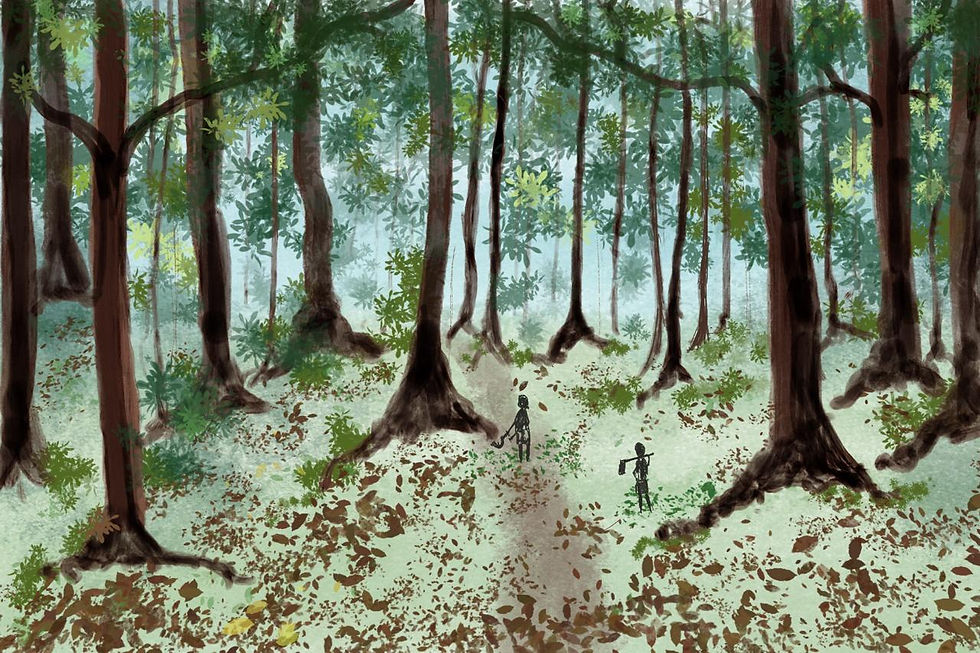
If there has ever been a novel and a group of characters I have wanted to hug tightly and never let go, it has to be this one. A book that breaks and warms the heart all at once. I have had the immense privilege of going as a visitor on a couple of walks with folks from the Irular community back when I was a teenager attending workshops at the Madras Croc Bank. I have been in awe of them ever since. This book gave me a window into their world. A story about three generations of an Irular family in early 1970s Tamil Nadu and how their lives are forced to transform in ways they could not have imagined. This is a book I would like to come back to time and again. To have Thenee, that joyful firecracker of a girl, show me around her land.

The Highest Tide
by Jim Lynch
Here is another re-readable, unputdownable novel. I first found it tucked away in the library of the ANET field station when I was working in the Andaman Islands back in 2013. It had only been a few months since I discovered the ocean in all its magic and wonder, and I couldn’t wait to know everything there was to know! I have never been good at absorbing new information from textbooks, and that extends to non-fiction books too. But following the story of Miles O’Malley, a teenage tide-pooling aficionado, captivated my imagination and introduced me to the natural history of the ocean. Up until that point, all I wanted to do was SCUBA dive in deeper waters and swim alongside fish and coral. Miles and all the bizarre and beautiful discoveries he made along his home shores inspired me to step out into the ankle-deep coastal ocean that was my backyard. If you like learning about the natural world but can also relate to all the angst that comes with being a teenager and could really use a laugh right now, this book might be for you!

Carrying Albert Home: The Somewhat True Story of a Man, His Wife, and Her Alligator
by Homer Hickam
A book I happened to pick up on a whim from a Crosswords pop-up sale. This book is quite a ride! Swerving between history, true events, fiction, and speculation. What parts of the story actually took place? How much of it was made up? This is a question even the author would not be able to tell you with certainty. Homer Hickam writes the ‘somewhat’ true account of a young couple that sets off on a 1,000-mile road trip across America during the Great Depression to return their pet alligator to ‘the wild’. What interests Hickam in writing this story? Well, it happens to be narrated to him by his mother, the owner of said pet alligator and one half of this adventurous couple. I won’t say more; I am known to give away too much. An absolutely delightful book for any kind of day you are having. Also perfect for your next book club meet!

Samuel John is a writer, photographer and researcher with a keen interest in spiders. He regularly daydreams of using a calculator, a pencil and a cup of sambar to unravel the secrets of the universe.
He recommends:

Last Chance to See
by Douglas Adams and Mark Carwardine
One of my life’s great regrets is that I’ll never get to buy Douglas Adams a beer. Last Chance to See has one important thing in common with his immortal Hitchhiker’s series: it is funny. Only Douglas Adams can take you on a journey around the world exploring critically endangered animals, and make it hilarious. The book is particularly inspiring for people who are deeply curious about the natural world but find themselves thrust into it later in life, when everyone else around already seems to know the name of every bird and plant in their subcontinent. The book is packed with natural history, social commentary, and good ol’ fashioned dry wit. Last Chance to See will make you gasp in wonder, stare at a wall in dismay, and just maybe, look at the world around slightly differently.

The Algorithmic Beauty of Plants
by Aristid Lindenmayer and Przemysław Prusinkiewicz
I can’t remember the sequence of events that led me to discovering The Algorithmic Beauty of Plants, or ABOP as it is fondly called. Whatever the course, I’m glad it led to this book. In the book, Lindenmayer and Prusinkiewicz break down L-systems, a formal system they constructed to recreate the form and structure of plants using iterative functions. Put simply, a set of equations run repeatedly a certain number of times can produce digital plants that bear an uncanny resemblance to the real thing. If you’d like a soft introduction to ‘formal systems’ before trying this application-focused book, then Gödel, Escher, Bach: An Eternal Golden Braid by Douglas Hofstadter is about as good as it gets. ABOP, for me, is a pleasant reminder that human expression can exist in an infinite number of forms, and somehow we’re still able to synthesise our ideas and communicate them with the world. And maybe, just maybe, you find someone else who sees it the way you do. The L-systems laid out in ABOP have since inspired art and science around the world.

What is Life?
by Paul Nurse
What is Life? tells an important story the way a story is meant to be told. Nurse writes about DNA, polymers, and enzymes with the warmth of a bedtime story. A lifetime of work in this system and Nurse’s genuine love for it show as he evokes wonder, is scientifically rigorous, and uses the simplest of language to do all this. Aside from the subject matter of the book, Nurse’s personal anecdotes are woven beautifully into the story and remind you that a person with a Nobel Prize and a Sir before their name is still very human. What is Life? is an edifying book in every way. The homonymous book by Erwin Schrödinger is worth mentioning here as an excellent follow-up for anyone who wants to go deeper down this rabbit hole of stripping life to its smallest constituent parts.

Sarah Abidi is a silly goose, who waddles through life with a microscope in one hand and a paperback in the other. She loves exploration, science, maps and swears by Lord of the Rings.
She recommends:

The Invention of Nature
by Andrea Wulf
I must admit that before reading Andrea Wulf’s The Invention of Nature, I knew very little about Alexander von Humboldt. This is quite surprising considering how much he travelled, observed, and wrote about the natural world. Wulf brings his extraordinary life to the fore - his journeys across continents, his fascination with plants, mountains, landscapes, and his growing realisation that nature was not a collection of separate things, but one vast interconnected world. I found myself completely drawn into Humboldt’s world. There is something wonderfully infectious about a person who could look at a mountain, a forest, or a river and see connections everywhere. What stayed with me most was Humboldt’s ability to see the planet as a whole, long before we had the language of climate change and ecology to describe it. Wulf does a wonderful job of bringing this forgotten naturalist back into our collective imaginations, and once you’ve met Humboldt, it’s quite difficult to forget him.

Dr Tatiana’s Sex Advice to All Creation: The Definitive Guide to the Evolutionary Biology of Sex
by Olivia Judson
If you think human dating is complicated, Olivia Judson’s Dr Tatiana’s Sex Advice to All Creation will make you feel much better about your own love life. The book takes the form of an advice column, with animals writing to a fictional Dr Tatiana about their various romantic and relationship troubles. And what troubles they are. Judson’s great gift is that she can make evolutionary biology feel like the juiciest advice column in the animal kingdom. You learn an astonishing amount without quite realising you’re being taught anything. I found myself laughing, wincing, and occasionally wondering why I had ever assumed that nature was dignified. It is a gloriously irreverent book, but underneath the absurdity is a serious lesson about evolution: there is no single way to reproduce, survive, and find a mate.

The Sea Around Us
by Rachel Carson
In 2016, I was stuck at home with a terrible case of bronchitis, coughing my way through long, dull days, when I picked up Rachel Carson’s The Sea Around Us. And for a little while, as I stepped into Carson’s world, I was no longer home. Suddenly, I was standing at the frontiers of the great oceans, witnessing the birth of the tides, and the slow, immense movements of a world I had barely begun to understand. The book is, in many ways, a history of the ocean - beginnings, tides and currents, creatures, and the immense forces that have shaped it over millions of years. Enraptured is the word I would use to describe the experience of reading it. Much has changed since Carson first wrote it, but I wouldn’t call it dated. If anything, it has aged rather beautifully. It remains a kind of time capsule of our understanding of this enormous blue planet. Carson’s words, written so many decades ago, can sometimes feel almost prophetic.
If you would like to write a book review of your favourite nature book, we would be delighted to publish it. Please send your submission to sarah@spidersandthesea.com.
Sharing is caring.
Share your thoughts with us in the comments section below.
Use the links below to share this story on your social networks.


Comments